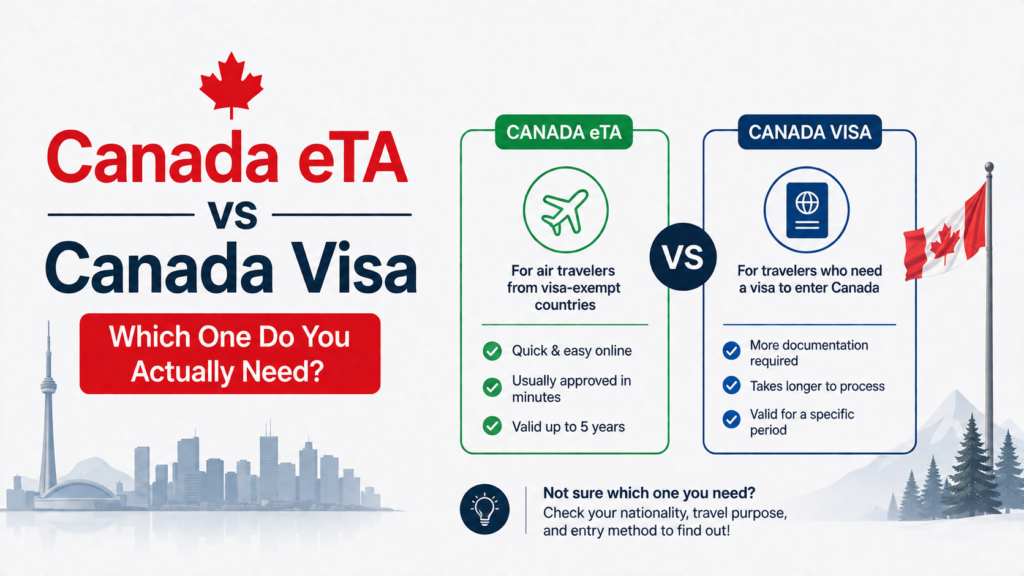
Canada eTA vs Canada Visa: Which One Do You Actually Need?
Ask ten travellers whether Canada requires a visa or an eTA, and you’ll likely get several different answers,…
Read More
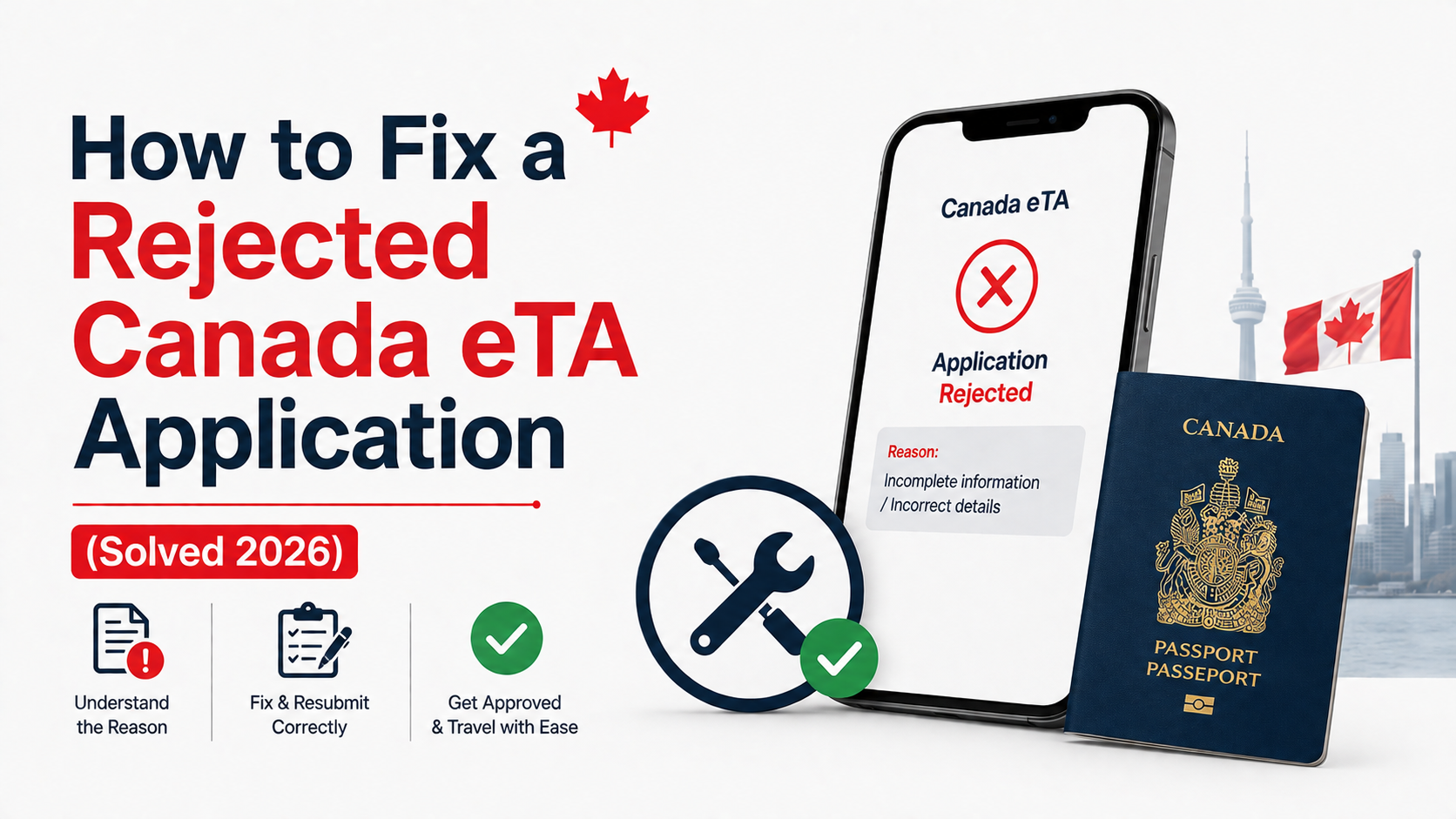
A rejected Canada eTA rarely comes with much explanation. One day you’re checking your inbox for a confirmation, and instead you get a short message telling you the application wasn’t approved. No detailed reasoning, no obvious next step, just a flight getting closer and a decision that feels final.
It isn’t always final. Some rejections are genuinely fixable once you understand what caused them, while others point to something bigger that needs addressing before any new application stands a chance. This guide walks through both situations so you know exactly which one you’re dealing with.
Before assuming the worst, it’s worth separating two things that get lumped together but aren’t the same.
A delay isn’t a rejection. If your application takes longer than the usual few minutes, IRCC may simply need more time or additional documents, and you’ll typically hear back by email within 72 hours. This is common and doesn’t mean anything has gone wrong.
A refusal is different. This is a formal decision that your application, as submitted, didn’t meet the requirements for approval. If this happens, you should not attempt to travel to Canada on that eTA, since a refused application means you’ll be stopped from boarding your flight entirely.
Knowing which one you’re actually facing changes everything about what to do next.
Refusals almost always trace back to one of a handful of underlying issues. Understanding which one applies to you is the real starting point for fixing it.
A previous visa or entry refusal. If you’ve been refused a Canadian visa or eTA before, even years ago, it can resurface during a new review. This alone doesn’t guarantee another refusal, since every application is assessed on its own, but it’s a common trigger for a closer look.
A past removal or deportation from Canada. If you were previously removed from the country, an eTA alone typically isn’t enough to resolve that history. Something called an Authorization to Return to Canada, or ARC, is usually required first.
Criminal history. Certain criminal convictions, including some that might feel minor by UK standards, can make someone inadmissible to Canada under its immigration rules. This applies even to older convictions and, in some cases, to charges that were later withdrawn.
Misrepresentation or inconsistent information. Providing incorrect details, whether intentionally or by mistake, is treated seriously. Even small inconsistencies between your form and your actual documents can be read as misrepresentation.
Errors made through unauthorized third parties. Using an agent or consultant who submits inaccurate information on your behalf, or who makes false claims about guaranteeing approval, can itself contribute to a refusal.
There’s no informal appeal process for a refused eTA. The only formal route is requesting a judicial review through the Federal Court of Canada, which generally requires hiring an immigration lawyer to prepare and argue the case. This path tends to make sense only for serious or complex situations, not for straightforward errors that can simply be corrected on a new application.
For most people, reapplying properly is a faster and more practical route than pursuing a review, as long as the actual reason for refusal has been addressed first.
Step one: read your refusal message carefully. It’s often brief, but it usually points to the general category of the problem rather than leaving you guessing entirely.
Step two: figure out if it’s a data issue or a deeper issue. Simple problems, like a mismatched passport number, a typo in your name, or an expired passport, can usually be corrected on a fresh application without much difficulty. Deeper issues, like inadmissibility due to criminal history or a past removal, need to be resolved before reapplying, not worked around.
Step three: gather documentation that supports a correction. If the issue was factual, such as an old criminal charge that was later dismissed, having documentation ready, like a police certificate or court record, strengthens a new application considerably.
Step four: decide whether an eTA is even the right document anymore. In some cases, a visitor visa allows for a more detailed review with supporting documents, which can work better than an eTA for applicants with a more complicated history. In cases involving inadmissibility, a Temporary Resident Permit may be the appropriate route instead.
Step five: reapply only once the underlying issue is genuinely addressed. Submitting the exact same information again, hoping for a different result, almost always leads to the same outcome. A new application should reflect something that’s actually changed since the last one.
A few specific situations call for something beyond a standard eTA application:
It’s worth being cautious of any company that promises a guaranteed outcome for a rejected application. Under Canadian law, it’s actually against the rules for anyone to claim they can guarantee a visa or eTA approval, since the final decision always sits with immigration authorities, not with whoever helps you apply. A legitimate service can help you avoid repeating the same mistakes and make sure your new application is accurate and complete, but no one can promise a specific result.
Does a rejected Canada eTA affect future travel to other countries? Not directly, though some countries do ask about previous visa or entry refusals on their own applications, so it’s worth being upfront if that question comes up elsewhere.
How long should I wait before reapplying after a rejection? There’s no fixed waiting period, but reapplying before the underlying issue is addressed rarely changes the outcome, regardless of how much time has passed.
Will a past rejection automatically show up on my new application? Your immigration history can be visible to reviewing officers, so it’s better to address it honestly than hope it goes unnoticed.
Is a Canada eTA rejection the same as being banned from Canada? No. A rejection means that specific application wasn’t approved. It doesn’t automatically prevent future applications, though repeated refusals for the same unresolved reason won’t lead anywhere new.
Fixing a rejected Canada eTA starts with understanding exactly what went wrong the first time, and getting that part right matters more than rushing to resubmit. At EasyCanadaETA.com, our team reviews your details carefully before a new application is submitted, helping you avoid the same mistakes that led to the first refusal and making sure everything lines up correctly this time. We can’t guarantee a government decision, no legitimate service can, but we can make sure your reapplication gives you the strongest possible starting point. Get in touch with our team before you reapply.